
Face
Twit1
Tube
NLPInProgessGradientCompleteSMALL1

The Bitesize Neuro-Linguistic Programming (NLP) Dictionary

Welcome to the Bitesize NLP Dictionary for items beginning with C In this section we recommend you take a look at Cause-Effect and Chunking to give you a taste of the best of Neuro-Linguistic Programming

C

Calibrate

To verify through observation how another person is thinking and feeling by reading their verbal and non-verbal signals thereby providing a comparative state for further thought and feelings exploration.

item1

Calibrated Loop

A communications loop where behaviours in one person trigger particular responses in another person such that the interaction is ongoing.

item2

Calibration

Learning someones verbal and non-verbal signals in order to understand their patterns of thinking such that their present behaviour can be compared to a known state or response.

item4

Capability

A set of skills which reliably allow someone to carry out a task in a particular context.

item3

Cause - Effect

A Meta Model language distortion where a particular action is perceived to cause a specific reaction or response. "It always rains on the weekend" is a good example of a cause effect distortion which often bothers me.

item5

Chaining Anchors

A powerful technique for shifting someones emotional state by taking them through a sequence of small changes to move them from their present state to a desired state.

item6

Changing Beliefs

A technique which allows the recipient to re-evaluate an existing belief which may be limiting them and replace it with a more empowering belief.

item7

Changing Personal History

A technique which allows a recipient to change the way they feel about events in their past. In essence changing their emotional response to their personal history.

item8

Chunk Size

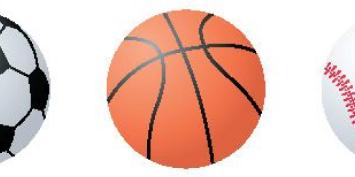
A chunk size relates to the amount of information which can be considered by one person at one time. These chunks may be general or detailed. It is generally established that we humans can typically handle between 5 and 9 chunks of information at any one time. As an example, the image on the right has one chunk, Sports Balls, within which there are nine chunks, one ball for each sport.

item9

Chunking

Chunking is the process of looking at a situation from a differing view point. You can move up a level, down a level or even sideways. An example might be a wordsearch puzzle where viewing the whole puzzle can sometimes reveal a word , equally concentrating on a single letter can also be an effective strategy.

item10

Cognitive Analytical Modelling

A process whereby expert skills are broken down into constituent parts and then analysed for effectiveness. This form of modelling requires conscious elicitation on the part of the expert and of the modeller.

item3a8

Cognitive Psychology

Cognitive Psychology is a branch of psychology which includes ideas and emotions within it's field of study. See also Behavioural Psychology.

item11

Cognitive Science

A scientific field of enquiry into the mind which draws on linguistics, psychology, Artificial Intelligence, Philosophy and Computer Science.

item12

Comparative Deletions

A Meta Model language deletion where something is compared but it is not clear as what it is being compared to. "This way is better" is an good example.

"This way is better"

Complex Equivalence

A Meta-Model distortion where two statements are considered to have the same meaning leading to misleading conclusions. "you are not looking at me, so you are not listening to me". Alternatively when the meaning of one word means differing things to differing people. "he looks cool" could be a fashion statement or a statement of emotional content.

item3a12

Confusion To Understanding

A technique which uses chained anchors to bring someone from the state of confusion to the state of understanding through a number of connected anchored states.

item14

Congruence

Personal congruence is achieved when your outcomes are fully aligned with your identity, beliefs and values. In affect all aspects of your being are working towards a common goal. Congruence in Communications is where someone is communicating with a strong belief. It is important to realise that Congruent communication is not necessarily an indicator of truth.

item15

Conscious

Awareness of the present moment.

item3a15

Conscious Awareness

The area of awareness in any given moment, imagine a vast landscape and then consider where your eyes may be focused at any given moment, this is the area of conscious awareness.

item16

Conscious Mind

Your awareness at a given moment and the driver of your critical faculty, logic and reason. It seems to be controlled by you and it has specific focus on specific thoughts. It is mainly controlled by automatic unconscious processes. A good example is passing a poster on a regular route, you may not notice it each time but you are likely to notice any changes which might occur.

item17

Consulting Steps

The steps which need to be considered during a consultation with clients.

item18

Content

Content is what is modified or adjusted by process. Often the content in NLP is not something which needs to be understood by the practitioner but it is the element which will change. For example if someone has a phobia (content) it is not necessary for the practitioner to know what that phobia is. They simply need to guide the client through the phobia cure (process).

item19

Content Reframing

Changing perspectives of a situation by changing either the meaning, or the context of that situation. Placing a Lion in a Zoo, or Shopping Centre would be a good context change. "She is very quiet" as a criticism could be reframed as "she would be a great librarian".

item20

Context

Context is the circumstance of the situation which drives how it is experienced. A clown would look perfectly at home in a Circus Tent, but probably a little scary in the middle of the night in a cemetery.

item3a21

Context Reframe

Changing perspectives of a situation by changing either the meaning, or the context of that situation. Placing a Lion in a Zoo, or Shopping Centre would be a good context change. "She is very quiet" as a criticism could be reframed as "she would be a great librarian".

item21

Conversational Postulate

A question which would normally be answered with a yes or no but which instead direct behaviour (a command). "Can you pass the salt?" is a good example, the command is 'pass the salt'.

"Pass the Salt"

Criteria

The values by which something is judged. These are personal or organisation values or judgments and can be elicited by asking in any given context "what is important to you".

"Judge Ye Not"

Criterion

The values by which something is judged. These are personal or organisation values or judgments and can be elicited by asking in any given context "what is important to you".

item24

Critical Submodalities

The details which you use to encode memories differently. For example you may remember angry moments with dark colours and calm moments with bright colours. Knowing your critical submodalities is the key to changing your memories and your behaviours.

item25

Cross Over Mirroring

Matching someones behaviour or body language with a different behaviour or body language. For example tapping your foot in time with their speaking or crossing legs subtly when arms are crossed. Cross over mirroring helps build unconscious rapport and is generally less noticeable than mirroring directly.

item26

Culture

A set of general rules which have been developed by communities of people which provide them with a group reality and which may, or may not match be matched by other cultures.

item27

Cybernetic Epistemology

The finding or patterns and relationships between parts of a whole system and based on the presumption that living systems such as a person will operate on rules outside of those laid down by the natural laws of physics.

item28

Cybernetics

The study of the structure within a system, for example a family and how it operates and communicates.

item29
NLPInProgessGradientCompleteSMALL1a1

Remember all the information in this dictionary is available in our handy iPhone and iPad App, click here to find out more

Bitesize NLP

Copyright BitesizeNLP 2012 - All Rights Reserved