
Face
Twit1
Tube
NLPInProgessGradientCompleteSMALL1

The Bitesize Neuro-Linguistic Programming (NLP) Dictionary

Welcome to the Bitesize NLP Dictionary for items beginning with A. In this section we recommend you take a look at Accessing Cues and Anchoring to give you a taste of the best of Neuro-Linguistic Programming

A

Accessing Cues

Accessing Cues represents the NLP Terminology for facial expressions which indicate how someone is retrieving or processing mental information. These cues can be micro muscular expressions and the most common cue discussed by practitioners is Eye Accessing Cues.

item2

Align

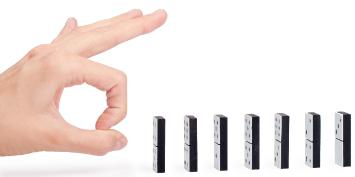
Aligning is the process of arranging things like feelings and process steps such that the are all contributing towards the same outcome. A common phrase and analogy is "getting all your ducks in a row" in other words, ensuring that everything is in the right place for a given outcome.

item10

Alignment

To understand someones experience or behaviours by acting as if you are that person. See also Align.

item3a

Analog, Analagous

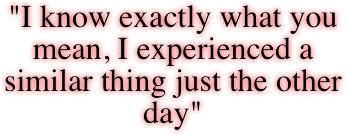
A situation or eperience which,whilst different, is similar to another experience. For example the fear of flying is not the same as the fear of drowning however both experiences are similar for the subject concerned.

Not to be confused with Analogue, see below.

item4b

Analogue

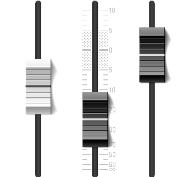
A continuously variable state, for exampe look at the sliders to the right, they can be position in an infinite variety of way, unlike a light switch which is either on or off.

item1a10

Analogue Marking

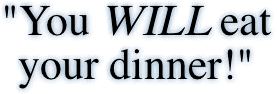
A technique which emphasises a word or action using your posture, your tone, your breathing etc. For example I am sure we have all experienced the phrase "you will eat your dinner".

item4b1

Anchor

A particular stimulus which automatically brings up a particular state of body and mind. For example the sound of an ice cream van or a wedding song. This is one of NLP's most powerful techniques and you can. learn more here

item1

Anchoring

The process of connecting a stimulus to a particular state of body and mind. Anchoring can occur naturally or be created intentionally. Take a look at the image to your right, does it invoke feelings for you? This image is one of the most relaxing images I have, it reminds me of my mexican holiday and I can feel, see and taste that holiday right now. Learn more here

item3

Anthropology

The study of humanity or, if you prefer, the study of what makes a human, human.

item4

As If Frame

Thinking of an event or experience as if it has already occurred thereby giving a different perspective on that situation. You might be going for a job interview, if you think about it as if you already have the job then you can more clearly think about the skills you might be using on a day to day basis and use that knowledge to inform your responses at interview.

item5

Associated

Any experience which you view from your own perspective. Seen with your eyes, heard with your ears and felt by you. Also see First Position.

item6

Attention

Those items which are being processed by your mind either consciously or unconsciously. You might pay attention to a traffic light consciously whilst also unconsciously be paying attention to curves in a road which you have driven down many times before.

item7

Auditory

Relating to the sense of hearing. A sensory modality and one of the possible representational systems.

item8

Auditory Processing

How sounds are processed by the brain, this includes your ability to have an inner dialogue, recall pieces of music or voices and the construction of sounds into words or musical compositions.

item9
NLPInProgessGradientCompleteSMALL1a1

Remember all the information in this dictionary is available in our handy iPhone and iPad App, click here to find out more

Bitesize NLP

Copyright BitesizeNLP 2012 - All Rights Reserved