
Face
Twit1
Tube
NLPInProgessGradientCompleteSMALL1

The Bitesize Neuro-Linguistic Programming (NLP) Dictionary

Welcome to the Bitesize NLP Dictionary for items beginning with P. In this section we recommend you take a look at Pattern Interrupt to give you a taste of the best of Neuro-Linguistic Programming

P

Pacing

Gaining Rapport with someone by matching over time elements of their world, this could be by matching their breathing, posture, behaviour, beliefs and ideas.

item1

Paradigm

Another word for a model or behaviour.

item2

Parts

A description of the elements of ourselves which make up a particular behaviour. For example "My head says yes but my heart says no" would indicate that there are at least two parts of you in conflict (not necessarily your head and heart!).

item3

Pattern

A sequence of activities or behaviours which repeats itself over time. You probably have a pattern of behaviour each morning, a sequence of activities which you follow when you wake up.

item4

Pattern Interrupt

To deliberately stop someone whilst they are going through a pattern of behaviour or activity, eliciting a temporary state of confusion. This can be incredibly useful for eliciting new states and behaviours.

item3a2

Perceptual Filters

Perceptual filters are like internal glasses we use for the world. Everything we see, feel, smell and experience has to fight it's way through our internal filters and those filters will have been developed by our life of experiences. For example you might love cats, in which case you might see a cat, pass it through your "I like cats" filter and smile. Alternatively you might have an "allergy to cats filter" in which case you will most likely start sneezing.

item5

Perceptual Position

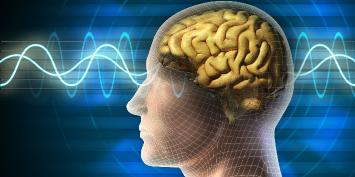
Our perceptual position is the position we are using in our brains at any given moment. For example if we are having a discussion with someone then the three common positions would be through our own eyes (First Position), through the eyes of the person we are discussing with (Second Position) and finally through the eyes of an observer to that discussion (Third Position).

item6

Personal Ecology

Our personal ecology describes the ecosystem in which we exist, work, live and love. By considering all aspects of our ecology when making personal change we ensure we are acting in harmony with how we live.

item7

Personal Evolution

How we evolve, how our learnings and experiences change our behaviours, emotions and strategies.

item8

Phonological Ambiguity

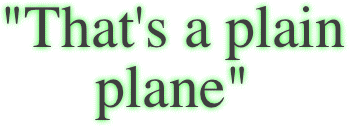
A word which has two possible meanings and which can therefore lead to ambiguity. These words can be very helpful when eliciting hypnotic states by acting as a confusion trigger for the conscious mind. Examples are "Plane" and "Plain" or "Hear" and "Here".

"That's a plain plane"

Physiological

The science of the body and its use, including the responses of the body to environmental and emotional triggers. Try for yourself to see the way your body respond directly in relation to your emotional state for example calm versus excited.

item10

Physiology

The science of the body and its use, including the responses of the body to environmental and emotional triggers. Try for yourself to see the way your body respond directly in relation to your emotional state for example calm versus excited.

item11

Posture, Breathing and Psychological State

The fact that our posture itself has a direct link to how we feel. By 'standing tall' we can increase our confidence by practicing positive movements we make positive emotional associations. See also Feldenkrais.

item12

Practical Dream

A practical dream is a vision which is well formed and which has the ability to motivate an individual to a specific goal or outcome.

item13

Predicate

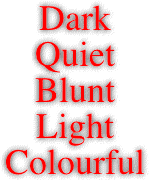
A predicate provides the description for something. In NLP predicates are generally used as descriptors for the various senses being used. For example "a bright idea" indicates a subject ("Idea") and a predicate which indicates a visual sense was involved in the forming of the sentence ("bright"). There are many descriptive words for each of our senses. The above sentence above could equally have been "Sound Idea", "Concrete Idea" or "Perceptive Idea" and each case would give an indication into the representational system in play at the time, visual, auditory, kinesthetic etc.

Bright

Predicates

A predicate provides the description for something. In NLP predicates are generally used as descriptors for the various senses being used. For example "a bright idea" indicates a subject ("Idea") and a predicate which indicates a visual sense was involved in the forming of the sentence ("bright"). There are many descriptive words for each of our senses. The above sentence above could equally have been "Sound Idea", "Concrete Idea" or "Perceptive Idea" and each case would give an indication into the representational system in play at the time, visual, auditory, kinesthetic etc.

Dark

Preferred Representational System

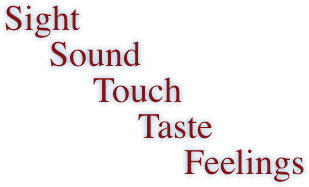
At any given instant in time you may be using one representational system more than another. For example in a darkened room you will likely be concentrating on hearing so your auditory systems may be dominant at the moment.

item15

Preferred System

At any given instant in time you may be using one representational system more than another. For example in a darkened room you will likely be concentrating on hearing so your auditory systems may be dominant at the moment.

Sight

Present State

A description of how a person, group or system are at this moment in time both physically and emotionally. This description often forms the basis against which behavioural changes are compared.

item17

Presupposition

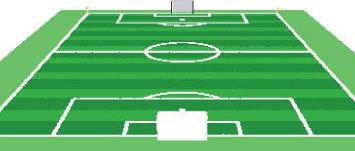
A distortion where some assumption is being made which is not stated in the sentence and which is being taked to be true for the statement to be understood. "We can't keep something this good a secret" is an example where the presupposition is that there is in fact something "this good". If you look at the image on the right you may well presuppose the match that will be played but now ask yourself, which sport?

item18

Primary or Preferred System

At any given instant in time you may be using one representational system more than another. For example in a darkened room you will likely be concentrating on hearing so your auditory systems may be dominant at the moment.

item19

Process

This is simply the how of any experience. It is what happens over time and is also the element which can be replicated or modified in order to change the experience.

item20

Punctuation Ambiguity

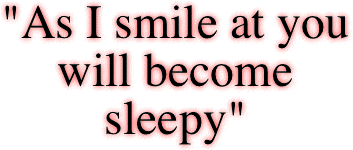
Where two sentences are linked into one forming a hypnotic interrupt. Here is a simple example linked by the word 'hand' - "I want you to notice your hand me the glass".

"As I smile at you
NLPInProgessGradientCompleteSMALL1a1

Remember all the information in this dictionary is available in our handy iPhone and iPad App, click here to find out more

Bitesize NLP

Copyright BitesizeNLP 2012 - All Rights Reserved